Softly, softly...
Going slow to get there quicker – with a willing partner on the way

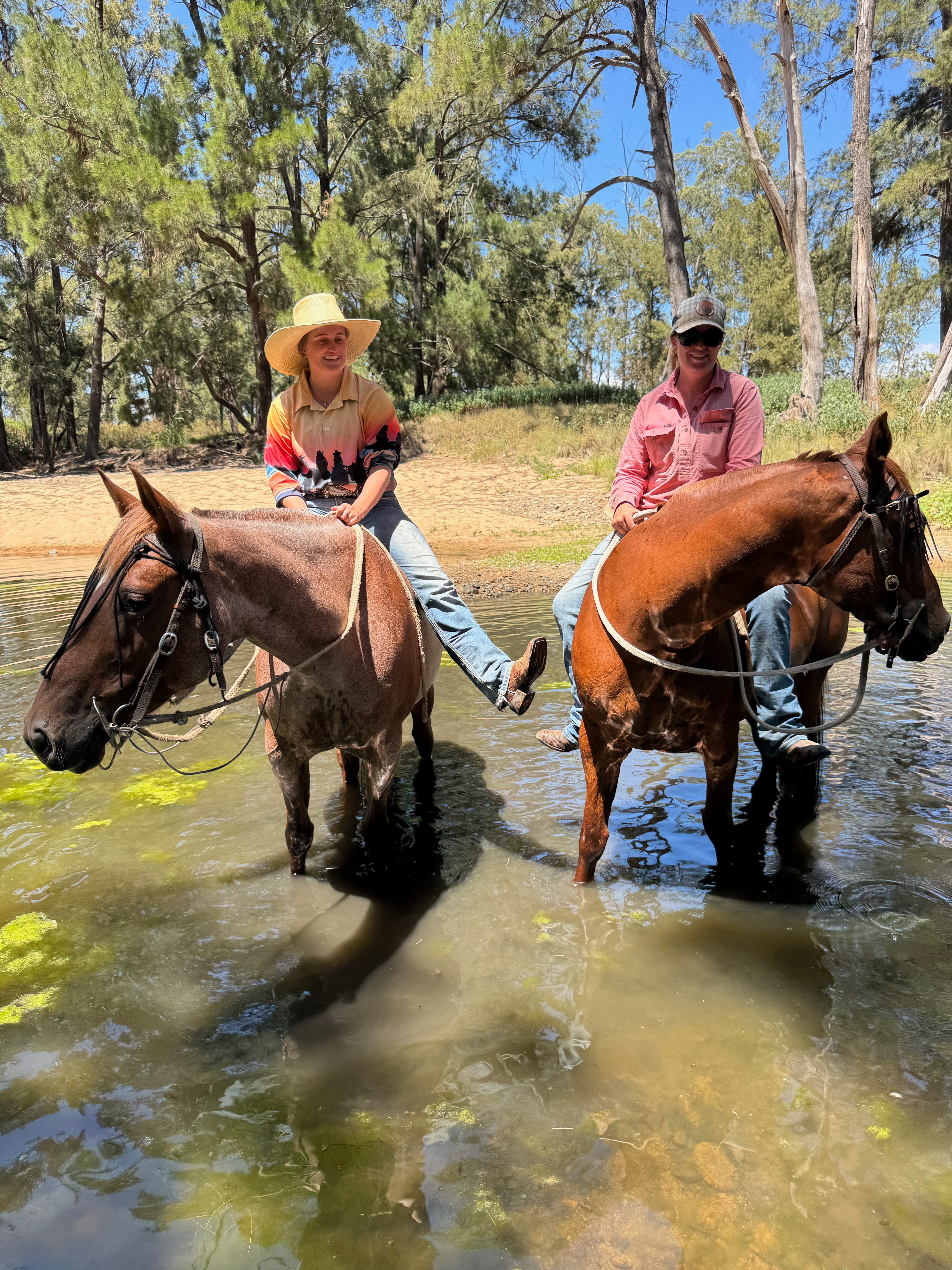
It struck me the other day after my third ‘horse listening’ session in a little more than a week, that I was clearly seeing a pattern, a pattern I’d noticed often before, but still hadn’t taken on board how prevalent it is in the horse world - and that is horse owners using just a little too much pressure to reach their desired goal, with the result that the horse will often become a little anxious or resistant, and as that happens, the owner can become a little anxious and unclear about what they’re asking.
If you think about it, how much do any of us like to be forced to do anything? The answer is, I would guess if I’m anything to go by, not at all. Encouraged, coaxed, asked, shown by example or even given a very clear and simple instruction, but forced? Not really. Well, horses are no different in that regard.
In all three cases we’re talking really caring, kind, experienced owners, and good-natured willing horses. This isn’t about trauma, or behavioural or pain issues, it’s simply about owners building a softer layer of trust with their horses.
The first horse, Chilli, is a beautiful and unusual paint Standardbred, bred for riding rather than for pacing. A sweet and chunky boy, around 15hh, owned by Roxanne, who lives near Armidale, who contacted me because she’d read The Heart of a Horse. She felt that her communication with Chilli wasn’t quite as clear as it could be, with the result that he’d become a little pushy with her. Roxanne was missing the deep soul relationship she’d had with her old mare, and wanted to see if she could create the same kind of relationship with Chilli.
When my current volunteer helper Gesa and I got to Roxanne’s property, Chilli was in his paddock, and happily walked up to Roxanne to be caught - except that then he got to her, he didn’t allow her to easily put the headcollar on. He pushed away from her, and when she did get on him, he turned away from her. Although he did nothing terrible, it was clear that he was kind of insisting that he was the one in charge.
It’s such a common problem. If you can’t be a clear, consistent leader for your horse, then your horse becomes confused, sometimes becoming pushy, sometimes anxious, sometimes shut down – and depending on the horse the behaviour can escalate into something undesirable.
“Work with the horse, not against him. Always listen to what the horse is trying to say. And always think for yourself.” Mark Rashid, ‘Horses Never Lie’.
I asked Roxanne to show me how she worked with Chilli on the leadrope, and noticed that she was using quite a lot of force to ask him to go back, but at the same time, none at all when he decided he wanted to come in and headbutt her for a cuddle.
I began to realise I was looking at a confused horse AND a confused human.
Consistency is key with horses. I picked up the lead rope and starting with the lightest pressure of a feather asked him to back away from me. Slightly to my surprise, he did. It was almost as if he was saying: ‘Oh, if that’s all you want, that’s easy!’
Chilli quickly showed me that he understood natural horsemanship commands, but when I led him, he tried a few times to come in very close, so I bumped him away from me and he very quickly got the idea that he needed to stay in his space, by my shoulder, and with me. It only took about 20 minutes of different exercises for Chilli to read that my instructions were clear, and he quickly became softer and softer. I also tested his back and shoulders which were stiff and sore, which made sense of the resistance that Roxanne was sensing in himwhen she was riding him.


What people often do when their horse does something they ask willingly, is to over-congratulate with treats or pats, or good boys or good girls, and that also confuses the message. All the horse wants to understand is that they answered your question correctly and pressure is released. Fussing and flapping, and moving erratically or too much are not in a horse’s vocabulary and for me with horses, less is always more. When Roxanne took over again, her body language was much clearer, her questions and her intentions much more obvious, and Chilli responded in such a calm, well-mannered way I would have been really happy to steal him away!
Roxanne sent me a message a few weeks later: “I’m having a fabulous time with Chilli - I’ve relaxed a lot more around him. I’m just enjoying spending time with him.” And surely, if you love horses, enjoying spending time with your horse should be( the first priority?
The second session was impromptu and occurred out of the blue. Gesa and I and Willow picked up a friend and drove to a nearby swimming hole. On the way there we drove past two young women on their horses. One on a very relaxed roan, the other rider on a chestnut mare. In the few seconds it took to pass them, my brain clocked two things - that chestnut was anxious, and for some reason I knew instinctively that it was a relatively new partnership. I was sure the rider hadn’t known the horse for long.
We headed on our way, parked the car and walked down to the creek, meandering along the small sandy beach until we got to the swimming hole, where we made ourselves comfortable. We hadn’t been there for long when we heard voices, and there were the two girls on their horses coming down the bank to the waterhole. We chatted to them for a while, and I asked them where they were from. They’d both ridden from different directions to meet up for their ride, and Georgia, the rider on the chestnut mare, Pep, told me that she hadn’t had the mare for long. Bingo, I thought, as the pair headed off for a ride up the creek. They came back a little while later, and gave the horses a bit of a splash about at the edge of the water. Claire’s horse, a roan Quarter Horse, Poppy, was very relaxed, Pep a bit more bothered, but still trying to please Georgia who was trying equally hard to get her horse into the water.
The girls decided they wanted to go in bareback, so they took the saddles off, I gave them a leg-up and they headed in for a splash. Pep really didn’t want to go in more than a few steps, and Georgia was what you might call ‘over encouraging her’, with her heels. I asked her if she’d mind if I helped her a bit and she said that she would be happy if I could.
The first thing I told her was to stop using her heels, and to just sit there, and let the Pep think about the water. Claire - who it seemed had grown up on the back of a horse - and I both pointed out that Pep was doing nothing wrong, she was just taking a little more time than Poppy to get used to it. The second thing was to get Georgia to find her centre of balance, so that rather than leaning slightly forward, and therefore being tense, I showed her to sit with her pelvis tucked under, her upper body straight and her legs hanging down. That meant of course that she had to allow Pep to do what she wanted to do which was to put her head in the water.
“But what if she rolls?”, Georgia asked.
“Has she shown any signs of rolling?” I asked, knowing very well the answer was ‘no’.
“No,” Georgia said, “but what if she does?”
“Well,” I said, “you’ll get wet, but how about you imagine she won’t roll.”
(Above: Pep and Georgia getting braver.)
In the meantime, the mare was taking matters into her own hooves. With no pressure from her rider, she was enjoying the water more and more, taking a step, and then another step into the water, making mighty splashes with her front legs, and dipping her nose into the water as she went. Every now and then Georgia’s nerves would get the better of her, and she would snatch the reins back, so that in effect she was telling the mare to stop/go.
“I think you really need to trust this horse,” I told her. “I mean you’ve only owned her a few months, you can ride her down the road, you can trail ride her, and she’s just shown you she’ll go into water for you - and not once has she turned a hair at suddenly seeing people here, or Willow swimming straight up under her nose, or you being bareback. Just try to relax and trust her.”
(Above: Willow helping…)
Claire, who was literally lying down on Poppy’s back, gazing up at the sky, agreed, and told her friend she should do the same thing.
So tentatively at first, Georgia did, and Pep did - well, nothing at all. Just stood there in the water. Georgia went a bit further back and relaxed, and when she sat up she had a huge grin all over her face. She swung herself forwards and almost strangled her horse with a massive hug. “I’ve always wanted to do that,” she said.
It was time for us to leave. I’d been in and out of the water several times, my friend was getting a little tired, and Willow was exhausted from swimming circles in front of the horses to show them how it was done.
We said our goodbyes and collected up our stuff, and I swapped details with the girls, and Georgia thanked me for helping her.
“You have a great horse,” I told her. “You’ve just got to build on the relationship you’ve got.”


A few days later I was off on the road back to my old neighbourhood in the Northern Rivers, to meet a friend’s new baby and catch up with friends and family, and also to give a session to Raegyn Hampson, an experienced horsewoman who wanted to move her two horses from her parents’ home to her place, only to discover that even though they had always floated well before, neither of them wanted to get on the float.
It was a misty grey morning, with the occasional sprinkling of rain when I arrived to meet Tessa a 16-year-old bay TB/Warmblood cross, who was started with natural horsemanship methods many years ago, and Stella, a six-year-old stockhorse, not started under saddle but with basic groundwork skills. The float was in the bottom of their paddock on some firm ground, and as I walked down the hill to join Raegyn, the horses cavorted around me happily.

They were obviously delighted to see their human, who has had both of them all their lives, and were curious to see what we were up to immediately. I decided to start by offering them both some marjoram oil, just to get them to settle and breathe, and Tessa particularly inhaled it deeply for sometime. It suggested to me there was a story in there, but I wasn’t quite sure what it was, so I just stored that information away for a while, and asked Raegyn to show me how she worked with Tessa, and what happens when she leads her to the float.
So Raegyn took the lead rope and immediately started turning Tessa in small tight circles around her, bending her head in and moving her from the back end. It was obvious, watching, that Tessa’s anxiety levels were increasing by the second, and when Raegyn led Tessa it was a push-me-pull-you situation with the soft emotional connection between them I’d witnessed nowhere to be seen.
It was my turn. I took Tessa’s lead rope and gently asked her back, and boy, it was instantaneous, soft and easy. She looked straight at me, her ears pricked, and I asked again, and again she took a step back, I coaxed her in and gave her a scratch, and then we did a small leading lesson, with me standing at her shoulder, lifting my leg, and asking her to walk on. She wasn’t sure at first, but with just a tiny bit of encouragement from my ‘tail’, she took a step - with me, then another, then another, and soon we were walking quietly around with her about a metre from me, but paying close attention to every change of direction I was asking for. This mare, I knew, was a ‘listening’ mare, she just needed someone to ask clearly and softly and to ‘listen’ to her. We walked up to the float ramp, and she willingly put her hooves on the ramp, and stood there, completely relaxed.
When Raegyn took Tessa back and repeated the exercises I’d done, she had a completely relaxed, compliant horse, and when she got to the float ramp, Tessa walked up of her own volition, and put her head and chest inside the float.
Raegyn couldn’t stop smiling. “She’s absolutely never self-loaded like that before,” she said. “That’s amazing.”
What was also amazing to me was Tessa’s obvious understanding of what we wanted, when she backed off the float, she looked closely at me, and closely at the float, then back at me again. Raegyn had told me that Tessa’s mother had died in the paddock the horses are in, and that for some years Tessa had been on her own, and suddenly I could feel the story.

“She’s worried about leaving the paddock,” I said to Raegyn, and as if on cue Tessa lowered her head and licked and chewed. “Part of her wants to go, but part of her feels as if she’s leaving her mother.”
I could feel a huge wave of emotion washing over Tessa, and then over me, extending out and on to Raegyn. We both stood beside Tessa, the three of us very quiet and still, in that state I’ve come to know, where human and horse connect in a state of love and mutual respect in a moment beyond time and space. But the rainclouds were threatening to break, and Raegyn and I decided that it was time to move on to Stella, and so we repeated the process.
Raegym told that had happened was that although Stella had been floated as a very young horse, when Raegyn had recently wanted to put them both into the float to move them, she didn’t know that Stella had a soft tissue injury in one of her rear legs, which obviously made it uncomfortable for her to go up the ramp, so not unnaturally she refused.
Confirmation by Ben Walder, the equine acupuncturist, that Stella had given herself a small paddock injury, and a few months rest and Raegyn had been ready to try again, but Stella had discovered her ‘no’, and had firmly stuck with it. So we began again with manners training. As a younger horse, with less knowledge than Tess, she wasn’t as light in the beginning to work with, but she got there - she’s a very clever mare - and it wasn’t long before she too was happily going to the top of the ramp and putting her head inside.
Almost on queue the universe decided that once we’d achieved this goal, the skies should open, and Raegyn and I both agreed that leaving the horses on a good note, with them feeling good about going up and down the ramp at will, was much better than trying anything more in the pouring rain.
It was obvious to me that Raegyn has a good connection with her horses, and also that they, in the same manner as Chilli and Pep, are good natured, willing horses.
Raegyn sent me a note a few days later thanking me. “I finally feel like I can make progress,” she wrote. “Other people have always wanted to move through so many things in one session and then I forget half of them! I’ve always felt I had a good connection with both horses, but Sunday’s session brought a different, stronger connection - especially with Tessa. She hasn’t looked at me like that before - waiting for my next ask.”
I am sure that very soon Raegyn’s beautiful horses will be back where they belong - with her, and that her relationship with both of them will only go on getting better and better.
Driving home I thought about Chilli, Pep, Tessa and Stella – a paint, a chestnut, a bay and a grey – a colourful quilt of beautiful horses all just asking for the same thing, a little more leadership, and a little more understanding. It had been a pleasure to play with horses that, unlike a lot of rescue horses, weren’t carrying a lot of trauma, and were so responsive to just the slightest adjustment in the way they were being asked to do a task. I hope Roxanne, Georgia and Raegyn have years of happy playing ahead of them.
You can buy a copy of my latest novel here: Light and Shadow – The story of Eadweard Muybridge, Flora Shallcross Stone and Harry Larkyns – as told by their granddaughter, Rosa Maria de Martinez.
This the link to purchase The Heart of a Horse – Life lessons from horses and other animals